What Botox and Dysport Actually Are
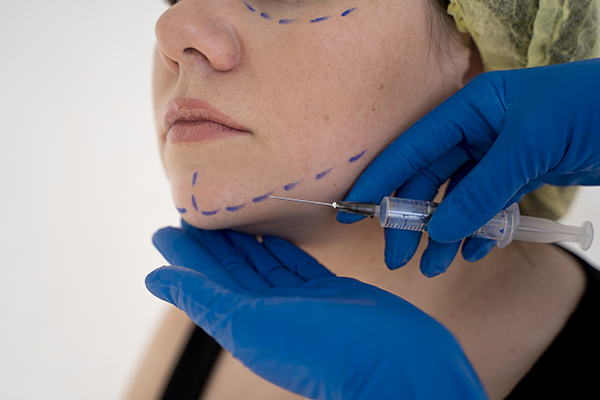
Botox and Dysport are both purified forms of botulinum toxin type A. When injected into a targeted muscle, the toxin temporarily interrupts the nerve signals that cause that muscle to contract. With the muscle relaxed, the overlying skin smooths out, and wrinkles soften or disappear. The effect is temporary — the body gradually metabolizes the toxin and muscle activity returns — which is why maintenance treatments are scheduled every few months.
The key distinction is in the formulation. Dysport uses a smaller protein molecule compared to Botox, and the product is diluted differently. These differences affect how the toxin spreads through tissue after injection and how many units are required to achieve a comparable result. Neither product is universally superior. The better question is which one is better suited to your specific treatment area and facial structure.
Onset Speed: Which Works Faster?
One of the most consistent differences patients notice is how quickly results appear. Dysport generally produces visible softening within two to three days of treatment. Botox typically takes three to seven days before the full effect becomes apparent, with some patients not seeing peak results until the ten-day mark.
For patients preparing for an event, reunion, or a special occasion, that faster onset with Dysport can make a practical difference. That said, both products eventually deliver comparable levels of muscle relaxation — Dysport simply gets there sooner. If timing isn’t a priority, onset speed alone shouldn’t drive the decision.
Spread and Diffusion: A Critical Difference
Dysport diffuses more widely than Botox after injection. Because of its smaller molecular weight and dilution ratio, the product spreads across a broader area of tissue from a single injection point. Botox stays more localized, concentrating its effect closer to the injection site.
This distinction has real clinical implications. For large, flat muscle groups — like the frontalis muscle across the forehead — Dysport’s wider spread can be advantageous. Fewer injection points can cover more area evenly, which some patients find more comfortable and which can produce a smoother overall result. For small, precise areas where you want targeted action and minimal risk of affecting adjacent muscles, Botox’s tighter diffusion profile gives the injector more control. This is especially relevant around the eyes and brows, where unwanted spread can alter expression.
Botox vs Dysport Houston: Unit Dosing Explained
Patients sometimes see pricing listed per unit and assume they can directly compare Botox and Dysport costs on a one-to-one basis. That’s a mistake. The two products use different unit scales. Roughly speaking, the conversion ratio is approximately 2.5 to 3 Dysport units for every 1 Botox unit to achieve equivalent effect, though this varies by treatment area and individual response.
What this means in practice: a forehead treatment quoted at 20 Botox units and 50 Dysport units is not necessarily more expensive — you’re comparing different measurement systems. Always evaluate total treatment cost rather than cost-per-unit when comparing the two products. A qualified injector will give you a clear estimate based on your anatomy and goals rather than letting unit counts create confusion.
Longevity: How Long Do Results Last?
Both Botox and Dysport produce results that last roughly three to four months for most patients. Some patients report that Dysport fades slightly faster than Botox, while others find the opposite. Individual metabolism, muscle mass, activity level, and how expressive you are all influence how long results last — often more than which product was used.
Clinical data from the American Society for Aesthetic Plastic Surgery consistently shows that most neuromodulator patients return for maintenance every three to four months. If you find one product consistently outlasts the other for you personally, that’s useful information to track over time with your provider. Most patients establish a clear preference after two or three treatments.
Best Uses for Botox
Botox excels in areas requiring precision. The glabellar lines — the vertical creases between the brows, often called the elevens — respond exceptionally well to Botox because the injector can place the product exactly where it’s needed without risk of spread affecting the upper eyelid or brow position. Crow’s feet, the fine lines radiating from the outer corners of the eyes, are another area where Botox’s controlled diffusion is valuable.
Botox is also the standard choice for medical applications like hyperhidrosis (excessive sweating), migraine prevention, and masseter reduction for jaw slimming. Its precision and extensive clinical track record in these applications make it the more studied option for off-label uses beyond cosmetic wrinkle treatment.
Best Uses for Dysport
Dysport’s wider diffusion makes it particularly effective for the forehead. The frontalis is a broad, flat muscle, and Dysport’s ability to spread from fewer injection points means it can produce smooth, natural-looking relaxation across the entire forehead without the risk of leaving untreated patches. Patients with larger foreheads or stronger frontalis muscles often find that Dysport delivers more even results in this zone.
Some injectors also prefer Dysport for patients who have developed tolerance or resistance to Botox over time. Because the proteins are slightly different between the two formulations, patients who feel their Botox results are weakening can sometimes see improved response by switching products, at least temporarily.
Which Is Better for First-Time Patients?
There is no single right answer for first-time patients — it depends on your anatomy, your primary concern, and what you’re hoping to achieve. A conservative approach with Botox in a targeted area gives both you and your provider a clear baseline. You’ll learn how your muscles respond, how long results last for you personally, and what dose produces the look you want.
That said, if your primary concern is horizontal forehead lines and you want smooth, even coverage, Dysport is a reasonable first choice for that specific area. The most important factor is not which product you start with — it’s working with an experienced, board-certified provider who evaluates your face as an individual and adjusts their approach accordingly. A good injector uses the product that serves you best, not the product they default to for everyone.
Safety and Side Effects
Both products share a similar side effect profile. The most common issues are temporary bruising or redness at the injection site, mild headache, and occasional tenderness. Serious complications are rare when treatments are administered by qualified medical professionals in a clinical setting.
The risk of ptosis — drooping of the upper eyelid or brow — exists with both products and is almost always related to injection technique rather than the product itself. Choosing an injector with deep anatomical knowledge and significant hands-on experience is the most effective way to minimize this risk. The American Society of Plastic Surgeons notes that neuromodulator complications are significantly more common in non-medical settings and with untrained injectors, underscoring the value of seeking treatment from a board-certified physician or highly trained medical professional.