Common Reasons Patients Seek Liposuction Revision (And What Can Be Done About It)
Introduction Conclusion Frequently Asked Questions Recent Posts Ready to go over your options with a doctor? Free Virtual Consultation

The treatment landscape for obesity and type 2 diabetes has changed dramatically over the past few years. Medications that once focused solely on blood sugar control are now helping millions of people achieve significant and sustainable weight loss. Among the most talked-about options are semaglutide and tirzepatide, two injectable medications that have transformed the way physicians approach chronic weight management.
While both medications have proven highly effective, patients often wonder which one offers better results. Is tirzepatide truly more powerful? Does semaglutide have advantages because it has been available longer? And which medication is the better choice for someone trying to lose weight while improving overall metabolic health?
The answer depends on several factors, including your medical history, treatment goals, and how your body responds to therapy. Understanding the similarities and differences between these medications can help you have a more informed conversation with your healthcare provider.
Although semaglutide and tirzepatide are both injectable medications designed to treat type 2 diabetes and support weight loss, they work in different ways. Understanding these differences can help explain why patients may experience varying results with each treatment.
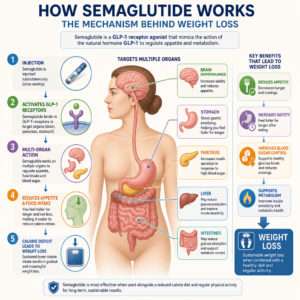
Semaglutide belongs to a class of medications known as GLP-1 receptor agonists. It mimics the naturally occurring glucagon-like peptide-1 hormone, which helps regulate blood sugar levels by stimulating insulin production when glucose levels rise. At the same time, it slows the rate at which food leaves the stomach and communicates with the brain to reduce appetite and increase feelings of fullness. These combined effects help patients consume fewer calories while maintaining better blood sugar control. Semaglutide is available under the brand names Ozempic® for type 2 diabetes and Wegovy® for chronic weight management.
Tirzepatide builds upon this concept by activating two hormone pathways instead of one. It is the first medication in its class to function as both a GIP (glucose-dependent insulinotropic polypeptide) and GLP-1 receptor agonist. This dual mechanism appears to enhance insulin sensitivity, improve blood sugar regulation, and further reduce appetite. Tirzepatide is currently marketed as Mounjaro® for diabetes management and Zepbound® for chronic weight loss. Because it targets two metabolic pathways simultaneously, many researchers believe it has the potential to produce even greater weight loss than GLP-1 medications alone.
Both semaglutide and tirzepatide have delivered impressive results in clinical studies, but they differ slightly in their overall effectiveness. For patients managing type 2 diabetes, both medications significantly improve blood sugar control by lowering A1C levels. However, research suggests that tirzepatide may provide a modest advantage.
Clinical trials have shown that semaglutide generally reduces A1C levels by approximately 1.8% to 2.0%, while tirzepatide has demonstrated reductions of up to 2.4%. The SURPASS clinical trial program found that tirzepatide consistently outperformed semaglutide in lowering blood glucose, making it an excellent option for patients requiring tighter diabetes management.
The difference becomes even more noticeable when comparing weight loss outcomes. The STEP 1 trial found that adults taking semaglutide lost an average of 15% of their body weight after 68 weeks of treatment.
Meanwhile, the SURMOUNT-1 trial demonstrated that patients taking tirzepatide achieved average weight loss of up to 22.5%, making it one of the most effective prescription weight loss medications studied to date.
Although these numbers are impressive, it’s important to remember that results vary from person to person. Factors such as diet, physical activity, consistency with treatment, and individual metabolism all influence overall success.
Since both medications affect digestion and appetite, they share many of the same side effects. Most patients experience mild gastrointestinal symptoms during the first few weeks of treatment as their bodies adjust to the medication. Nausea is the most commonly reported complaint, although vomiting, constipation, diarrhea, stomach discomfort, and reduced appetite may also occur.
Fortunately, these side effects often improve over time. Physicians typically minimize discomfort by gradually increasing the dosage rather than starting patients on the highest dose immediately. This gradual approach allows the digestive system to adapt and often makes treatment much easier to tolerate.
While serious complications are uncommon, they can occur. Rare risks include pancreatitis, gallbladder disease, dehydration-related kidney problems, and low blood sugar when these medications are combined with insulin or certain diabetes drugs. Animal studies have also identified a potential risk of thyroid C-cell tumors, which is why these medications are not recommended for patients with a personal or family history of specific thyroid cancers. Discussing your complete medical history with your physician before beginning treatment is essential for determining whether either medication is appropriate for you.
Cost is another important factor when comparing semaglutide and tirzepatide. Without insurance coverage, semaglutide products such as Ozempic® and Wegovy® generally cost between $900 and $1,300 per month. Tirzepatide products, including Mounjaro® and Zepbound®, typically range from $1,000 to $1,200 per month, although prices vary depending on dosage, pharmacy, and location.
Insurance coverage differs significantly between providers. Many insurance plans cover Ozempic® and Mounjaro® for patients with type 2 diabetes, while coverage for Wegovy® and Zepbound® for weight loss remains more limited. Fortunately, both manufacturers offer savings programs that may help eligible patients reduce their out-of-pocket expenses.
Choosing between semaglutide and tirzepatide ultimately depends on your personal health goals and your physician’s recommendations. Semaglutide remains an outstanding option for individuals seeking proven blood sugar control and substantial weight loss, particularly because it has a longer history of clinical use and extensive long-term safety data. Patients who already have insurance coverage for Ozempic® or Wegovy® may also find semaglutide to be the more practical choice.
On the other hand, tirzepatide has emerged as one of the most powerful medical weight loss treatments currently available. Its dual-hormone mechanism has consistently produced greater weight loss and slightly better blood sugar improvements in clinical studies. Patients who are looking for maximum weight reduction and qualify for treatment often find tirzepatide to be an attractive option, provided that insurance coverage or financial considerations are manageable.
Rather than asking which medication is universally “better,” it is more appropriate to ask which medication is better for you. Every patient’s medical history, lifestyle, health conditions, and treatment goals are unique, making personalized medical guidance essential.
While semaglutide and tirzepatide are currently among the most widely prescribed medications for medical weight loss, researchers continue to develop new therapies that may further improve outcomes. One of the most promising investigational medications is retatrutide, which is still undergoing clinical trials. The following comparison highlights how these three medications differ based on currently available research.
Feature | Semaglutide (Wegovy®) | Tirzepatide (Zepbound®) | Retatrutide* |
Drug Class | GLP-1 receptor agonist | Dual GIP/GLP-1 receptor agonist | Triple GIP/GLP-1/Glucagon receptor agonist |
FDA Status | Approved | Approved | Investigational (Not yet FDA-approved) |
Primary Uses | Obesity, Type 2 Diabetes | Obesity, Type 2 Diabetes | Under investigation for obesity and diabetes |
Average Weight Loss | ~15% of body weight | Up to 22.5% | Up to 24% in Phase 2 trials |
A1C Reduction | ~1.8–2.0% | Up to 2.4% | Promising early results |
Weekly Injection | Yes | Yes | Yes (clinical trials) |
Long-Term Safety Data | Extensive | Growing | Not yet established |
Although semaglutide and tirzepatide have transformed the treatment of obesity and diabetes, they are not miracle drugs that work independently of healthy habits. The greatest success occurs when medication is combined with proper nutrition, regular physical activity, behavioral changes, and ongoing physician supervision.
Medical oversight allows healthcare providers to monitor progress, adjust dosages when necessary, manage side effects, and ensure that treatment remains both safe and effective. Because obesity is a chronic medical condition, patients often benefit from long-term follow-up rather than viewing medication as a temporary solution.
Semaglutide and tirzepatide have revolutionized the treatment of obesity and type 2 diabetes, offering hope to patients who have struggled to achieve lasting results through diet and exercise alone. While semaglutide remains one of the most trusted and well-established options available, tirzepatide has demonstrated even greater potential for weight loss and blood sugar improvement in recent clinical trials.
However, selecting the right medication involves more than comparing percentages. Your medical history, current health, treatment goals, insurance coverage, and personal preferences all play an important role in determining which therapy is the best fit. Consulting with an experienced physician ensures that your treatment plan is personalized, medically appropriate, and designed to help you achieve safe, sustainable results.
Yes. Both medications have FDA-approved versions specifically intended for chronic weight management in eligible adults. Your physician can determine whether you meet the criteria based on your BMI, medical history, and weight-related health conditions.
Clinical studies suggest that tirzepatide may produce slightly faster and greater weight loss than semaglutide. However, both medications require consistency, healthy lifestyle changes, and several months of treatment to achieve their full benefits.
Absolutely. While these medications help regulate appetite and improve metabolism, they are most effective when combined with nutritious eating habits, regular physical activity, and ongoing medical supervision. Long-term success depends on building healthy lifestyle habits alongside medication.

Introduction Conclusion Frequently Asked Questions Recent Posts Ready to go over your options with a doctor? Free Virtual Consultation


Introduction Conclusion Frequently Asked Questions Recent Posts Ready to go over your options with a doctor? Free Virtual Consultation

Introduction Conclusion Frequently Asked Questions Recent Posts Ready to go over your options with a doctor? Free Virtual Consultation

Introduction Conclusion Frequently Asked Questions Recent Posts Ready to go over your options with a doctor? Free Virtual Consultation

Introduction Many women experience changes in their vaginal health over time due to aging, childbirth, menopause, and hormonal fluctuations. These changes can affect comfort, confidence,

Introduction Losing weight can feel overwhelming, especially with so many medical weight loss programs promising fast results. For patients in Houston exploring medically supervised options,

A well-defined jawline can dramatically enhance facial balance and confidence. However, many people struggle with excess fat beneath the chin, often referred to as a

Introduction Many people begin their weight loss journey with the best intentions, often trying different diets, supplements, or trending programs without professional guidance. While motivation
Introduction Losing weight is a challenge for millions of people, even when they follow strict diets and exercise routines. For many, the issue is not

Introduction Losing weight can feel overwhelming, especially with so many medical weight loss programs promising fast results. For patients in Houston exploring medically supervised options,
Introduction Liposuction remains one of the most popular cosmetic procedures in the United States, but not every patient achieves their desired results after the first

Introduction Many women experience changes in vaginal health due to childbirth, aging, or hormonal shifts—but it’s not something that’s often talked about openly. Symptoms like

What You Should Know In recent years, more women have started looking for non-surgical solutions to address concerns such as vaginal laxity, dryness, mild urinary

Introduction: Why Fast Weight Loss Should Still Be Healthy Losing weight quickly is a common goal, but lasting results depend on more than eating less
Select an new patient offer to experience the Rodriguez Rejuvenation difference!