What Are Dermal Fillers, and How Do They Work?
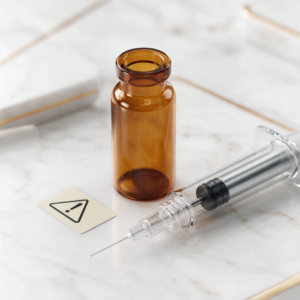
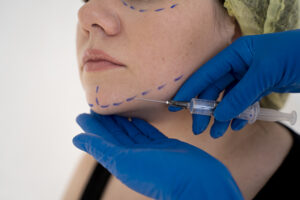
Dermal fillers are injectable substances used to restore volume, smooth lines, and contour facial features. They work by physically filling in areas where tissue has thinned or shifted — think nasolabial folds, lips, cheeks, and jawlines. Most FDA-approved fillers are made from hyaluronic acid, a naturally occurring sugar molecule found in skin and connective tissue. The body recognizes it, metabolizes it over time, and the results gradually fade — which is part of what makes it safe.
Other approved filler categories include calcium hydroxylapatite (Radiesse), poly-L-lactic acid (Sculptra), and autologous fat — meaning fat transferred from your own body. Each has a specific set of approved uses, injection depths, and anatomical sites where the FDA has determined benefits outweigh risks. The common thread across all of them: they were studied, tested, and cleared through a rigorous regulatory process.
What they are not is permanent. That’s not a flaw — it’s a feature. Reversibility and biodegradability are core safety criteria. When something goes wrong with a hyaluronic acid filler, an enzyme called hyaluronidase dissolves it quickly. That option disappears entirely with permanent or semi-permanent fillers, including PMMA.
What Are PMMA Injections?
PMMA stands for polymethylmethacrylate, a synthetic polymer that has been used in medical applications ranging from bone cement to contact lenses. In aesthetics, PMMA takes the form of tiny microspheres suspended in a collagen-based carrier gel. Because the body cannot break down the microspheres, the results are considered permanent — the PMMA stays in tissue indefinitely.
The FDA approved one PMMA-based filler, Bellafill (formerly Artefill), specifically for the correction of moderate-to-severe nasolabial folds and certain types of acne scars in adults over 21. That approval came with strict labeling requirements, a mandatory skin test to screen for allergic reactions, and clear guidance that it should only be administered by trained clinicians. It is not approved for lips, under-eye areas, or body augmentation of any kind.
The problem is that PMMA products are not all the same. Only one PMMA-based filler is FDA-approved, and it is approved for specific facial uses. Products sold outside licensed medical channels, including those sold directly to the public or online, may be fake, contaminated, or not approved for use in the U.S. The FDA has warned against getting filler injected into the breasts, buttocks, or spaces between the muscles, because using filler for large-scale body contouring can lead to serious injury, including long-term pain, infection, permanent scarring or disfigurement, and even death.
The Specific Dangers of Unapproved PMMA Use
When PMMA microspheres are injected into the wrong tissue plane, the wrong anatomical site, or in excessive quantities, the immune system mounts a foreign body response. The result is granuloma formation — chronic, inflammatory nodules that are painful, disfiguring, and extremely difficult to treat. These granulomas do not go away on their own. They require surgical excision, long-term steroid injections, or both — and even then, full resolution is not guaranteed.
Vascular occlusion is another serious risk. Injecting any filler into or near a blood vessel blocks circulation to surrounding tissue. With hyaluronic acid fillers, hyaluronidase reverses this within minutes if administered fast enough. With PMMA, there is no reversal agent. Tissue death — necrosis — follows, sometimes leading to permanent scarring or blindness when it occurs near the eye.
Infection risk is compounded when PMMA is administered in unsterile environments by untrained individuals. Biofilm infections around permanent microspheres are notoriously resistant to antibiotics, often requiring surgical debridement months or years after the initial injection. Patients have required reconstructive surgery to manage complications from PMMA administered in hotel rooms, homes, and unlicensed clinics.
Who Is Injecting Unapproved Fillers — and Where
This is not a problem confined to developing countries. Unlicensed injectors operate in every major American city, including Houston. They advertise on social media, offer steep discounts compared to medical practices, and target patients who want dramatic results at minimal cost. Some call themselves aestheticians or “filler specialists” with no medical license whatsoever. Others are licensed in one area of practice but administer fillers outside their scope.
Filler parties — events held in private homes or rented spaces where multiple people receive injections in a single session — remain a persistent underground practice. The absence of proper emergency equipment, sterile technique, and anatomical training in these settings creates conditions where a vascular emergency becomes a catastrophe rather than a manageable complication.
Social media has accelerated this problem significantly. Dramatic before-and-after photos circulate without any context about what substance was used, by whom, or what the patient was risking. Followers assume that if results look good in a photo, the procedure was safe. That assumption is wrong.
What the FDA Has Actually Approved
As of 2024, FDA-cleared dermal fillers include products based on hyaluronic acid (brands like Juvederm, Restylane, Revanesse, and RHA Collection), calcium hydroxylapatite (Radiesse), poly-L-lactic acid (Sculptra), and the one PMMA-based product, Bellafill. Each approval specifies the anatomical sites, injection technique, and patient population for which the product is cleared.
The FDA’s dermal filler resource page lists currently approved products and provides consumer guidance on reporting adverse events. If a filler isn’t on that list, it hasn’t cleared the safety and efficacy bar required for use in the United States — full stop.
It’s also worth understanding that FDA approval covers both the product and the indication. Using even an approved filler off-label — in a site or manner not covered by its clearance — introduces risk that the clinical data doesn’t support. This is another reason injector training and medical oversight matter as much as the filler itself.
Silicone: Another Unapproved Substance With a Long Trail of Harm
Liquid silicone injections deserve mention alongside PMMA because they appear in the same underground market and cause similar harm. Liquid injectable silicone is not FDA-approved for soft tissue augmentation anywhere in the face or body. It migrates through tissue over time, triggers chronic inflammatory reactions, and forms silicone granulomas that are even harder to manage surgically than PMMA granulomas.
Patients who received silicone injections for buttock augmentation years ago are still seeking surgical correction today. Removal is rarely complete, and each procedure carries significant risk. Prevention — meaning never receiving silicone injections in the first place — is the only reliable strategy.
How to Verify That a Provider and Product Are Legitimate
Before any injectable treatment, ask your provider directly which product they’re using and verify it against the FDA’s approved list. A legitimate medical provider will have no hesitation answering this question and showing you the product packaging. The lot number, manufacturer, and expiration date should be visible on a sealed, single-use syringe.
Confirm that your injector holds an active medical license and that the practice is operating as a licensed medical facility. In Texas, the Texas Medical Board and the Texas State Board of Pharmacy are the relevant licensing bodies. You can verify a physician’s license at the TMB website in minutes.
Be skeptical of prices that seem dramatically lower than the market rate. Authentic Juvederm, Restylane, and other FDA-approved fillers have established wholesale costs. When a provider’s price is well below that threshold, the product is almost certainly counterfeit, diluted, or unapproved. The savings aren’t real — they’re deferred costs in the form of potential complications.
What to Do If You’ve Already Received an Unapproved Filler
If you suspect you’ve been injected with PMMA, liquid silicone, or any other unapproved substance — especially if you’re experiencing pain, hardening, nodules, skin discoloration, or asymmetry — see a board-certified plastic surgeon or dermatologist promptly. Early intervention significantly improves outcomes for granulomas and vascular complications.
Document everything you can about where the procedure was performed, who administered it, and what product was used. This information helps your treating physician and may be relevant if you file a complaint with the FDA’s MedWatch reporting system. Reporting adverse events matters — it contributes to regulatory action and protects other patients.
Do not attempt to dissolve or massage away nodules on your own, and do not return to the original provider for “corrections.” Seeking treatment at a licensed medical facility with experience managing filler complications gives you the best chance of a good outcome.