Why Liposuction Revision Recovery Takes Longer
The single biggest reason revision recovery extends beyond primary liposuction recovery is scar tissue. After your first procedure, fibrous bands of scar tissue formed as your body healed. That tissue is denser and less pliable than untreated fat. When Dr. Rodriguez works through a revision procedure, he’s navigating that internal architecture — carefully releasing adhesions and recontouring areas that have already undergone significant change.
Scar tissue also affects how swelling behaves. In primary liposuction, swelling follows a fairly predictable path downward over weeks. In revision cases, swelling tends to be less uniform, more stubborn in certain zones, and slower to fully resolve. That’s not a complication — it’s simply the biology of previously treated tissue doing its job.
Understanding this from the outset sets realistic expectations. Patients who know why revision takes longer are far better equipped to stay patient during the process and protect their long-term results.
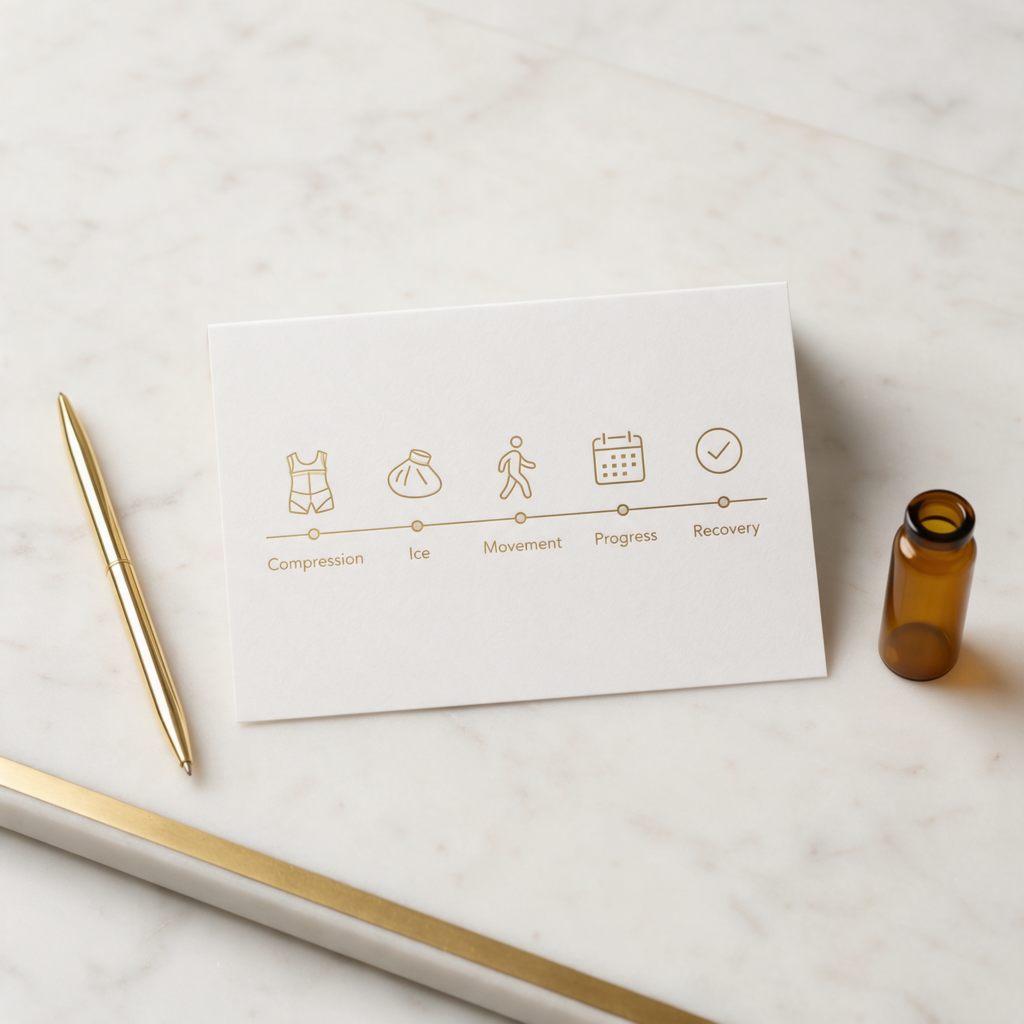
Week 1: Rest, Swelling, and Compression
The first week after liposuction revision is the most physically demanding part of recovery. Swelling is at its peak. Bruising is visible. The treated areas feel tender and tight. This is completely normal, and it’s your body’s healing response doing exactly what it should.
You’ll wear a compression garment from the moment you leave the surgical suite. This is non-negotiable. Compression reduces fluid accumulation, supports the newly contoured tissue, and minimizes the risk of seroma — a pocket of fluid that can distort results if left unaddressed. Dr. Rodriguez prescribes specific garments based on the areas treated, and wearing it consistently is one of the most direct ways you influence your outcome.
Plan to rest during this week. Short, slow walks around your home are encouraged to support circulation, but strenuous movement, bending, and lifting are off the table. Sleep with your upper body slightly elevated if the torso was treated. Arrange for help with household tasks, childcare, and errands before your procedure date — you’ll genuinely need it.
Most patients take seven to ten days off work depending on the physical demands of their job. Remote or desk-based roles often allow a return in the latter part of Week 1 or early Week 2. Physical jobs require more time.
Weeks 2 Through 4: Gradual Progress
Pain and acute discomfort drop off noticeably in Week 2. What lingers is a feeling of tightness, mild soreness with movement, and visible swelling — particularly in the early morning before you’ve been upright for a while. Many patients describe this phase as feeling puffy or not yet seeing the results they hoped for. That’s expected. You’re still in the thick of the inflammatory phase.
Light activity resumes during this window. Gentle walking, non-strenuous daily tasks, and a gradual return to normal routines are all appropriate by Weeks 3 and 4. Dr. Rodriguez guides each patient individually, because the treated areas and revision complexity vary significantly from case to case.
The compression garment stays on. For most revision patients, full-time compression continues through the first four weeks, transitioning to part-time wear — typically daytime hours — in the weeks that follow. The garment is doing active work throughout this period, and removing it early is one of the most common reasons patients see less-than-ideal contouring.
Follow-up appointments with Dr. Rodriguez during this phase allow him to monitor healing, check for any areas that need attention, and adjust your post-operative plan as needed.
Months 2 and 3: Swelling Recedes, Early Results Emerge
By the two-month mark, a meaningful portion of the swelling has resolved. Patients often describe this as the point where they start to see something that looks like their anticipated result — though the final picture isn’t there yet. Contours are visible but still refining. Some areas feel firmer than others due to lingering internal inflammation.
Physical activity expands considerably in this phase. Most patients resume moderate exercise — including cardio and light resistance training — with Dr. Rodriguez’s clearance. High-impact activity and anything that strains the treated areas directly requires additional time. Every plan is individualized based on how the tissue is responding.
According to the American Society of Plastic Surgeons’ breakdown of post-liposuction recovery, most patients see 80 to 90 percent of their results by the three-month mark. For revision patients, that number is sometimes slightly lower at three months due to the complexity of treating previously altered tissue — but the trajectory is the same.
Lymphatic massage, when recommended by Dr. Rodriguez, plays a useful role during this phase. It supports drainage, softens areas of residual firmness, and helps the skin adapt more smoothly to the new contour underneath.
Months 4 Through 6: Final Results Take Shape
This is the phase most revision patients are working toward. By Month 4, swelling has largely resolved. The skin is adapting. The contours Dr. Rodriguez worked to achieve become clearly visible. Residual firmness in isolated spots continues to soften through Month 6 and, in some cases, slightly beyond.
The scar tissue that made revision recovery longer in the early phases is also maturing and softening during this window. External scars at incision sites, typically very small in liposuction procedures, fade significantly. Internal tissue continues to remodel for up to a year in some revision cases — though the visible result is well-established by Month 6.
This is also the phase where the full value of your compression garment use, your follow-up attendance, and your activity discipline becomes apparent. Patients who stayed consistent in the early months see better long-term contouring than those who cut corners in Weeks 1 through 4. The work you put in early pays off here.
Compression Garment Use: A Closer Look
The compression garment deserves its own section because patients consistently underestimate its role. It’s not just about comfort. Compression directly shapes how the skin adheres to the underlying tissue as healing progresses. Without adequate compression, fluid accumulates unevenly, skin retraction is less uniform, and the final contour is less refined.
For liposuction revision patients, Dr. Rodriguez typically recommends full-time compression for four to six weeks, depending on the extent of the revision. After that, transitioning to daytime-only wear continues for another several weeks. Garment fit matters as much as duration — a garment that’s too tight restricts circulation, while one that’s too loose fails to do its job. Dr. Rodriguez’s team fits each patient appropriately and adjusts recommendations at follow-up visits.
Explore additional body contouring options at Rodriguez Rejuvenation, including SmartLipo Laser Liposuction and VASER Lipo, which Dr. Rodriguez incorporates into revision cases when the tissue and goals call for it.
What’s Normal vs. What Needs Attention
Swelling, bruising, tightness, and mild numbness are all normal parts of revision recovery. Skin surface irregularities and areas that feel firmer than others are also expected, particularly in the first two to three months. These are not signs that something has gone wrong.
Contact Dr. Rodriguez’s office promptly if you notice any of the following: a sudden increase in pain after pain was improving, significant redness or warmth spreading from an incision site, fever above 101°F, fluid accumulating in a distinct lump (a potential seroma), or any discharge from incision sites that appears thick or discolored. These signs warrant evaluation — not panic, but prompt attention.
Emotional ups and downs during recovery are also common and worth acknowledging. The first few weeks of looking swollen and not yet seeing results can be discouraging. Most patients who’ve worked with Dr. Rodriguez describe Month 3 as the turning point where their mindset shifts because the results genuinely start to become visible.
When to Contact Dr. Rodriguez During Recovery
Beyond monitoring for the warning signs above, regular check-ins with Dr. Rodriguez are built into your recovery plan. Expect follow-up appointments within the first week, again around Week 4, and at the three-month and six-month marks. These visits aren’t just for monitoring — they’re an opportunity to ask questions, adjust your garment or activity guidelines, and ensure your healing is tracking as expected.
If something feels off between scheduled appointments, reach out. Dr. Rodriguez’s practice operates with a patient-first philosophy, and the team is available to address concerns without making patients wait for their next scheduled visit. Proactive communication during recovery is always the right call. Learn more about the full liposuction revision process at Rodriguez Rejuvenation, including what the procedure itself involves and how Dr. Rodriguez approaches complex revision cases.