What Abdominal Fibrosis Actually Feels Like
Fibrosis after liposuction doesn’t always look dramatic from the outside, at least not at first. What patients describe most often is a sensation of tightness or hardness beneath the skin, areas that feel like firm ridges or bands when pressed, and surface irregularities that weren’t there immediately after surgery. Some patients describe it as feeling like there’s a cord or rope just under the skin. Others notice that their abdomen looks fine standing up but shows significant waviness when they bend forward or sit.
The texture changes can appear as early as three to four weeks post-op, though they’re more commonly noticed around the two to three month mark when the initial swelling subsides and the underlying tissue becomes more apparent. Pain or tenderness in those areas is also common, particularly with pressure or movement. Some patients experience a pulling sensation that affects their posture or range of motion.
It’s worth separating fibrosis from normal post-liposuction swelling. Swelling is diffuse, spread across a broad area, and gradually decreases with time. Fibrosis, by contrast, presents as localized firmness or banding — specific areas that feel distinctly different from the surrounding tissue.
The Biology Behind Why Fibrosis Forms
Liposuction, regardless of technique, creates physical trauma to tissue. The cannula moves through fat layers, disrupting cells and triggering an inflammatory response. That inflammation is a normal and necessary part of healing. The problem arises when the healing response overshoots — producing too much collagen, too fast, in a disorganized pattern.
Under normal circumstances, collagen fibers align in a structured way that maintains tissue flexibility. In fibrotic tissue, those fibers form in a haphazard, cross-linked pattern that creates stiffness. The result is scar-like tissue that adheres to surrounding structures, pulling the skin downward in some spots and creating raised firmness in others. This is the mechanical explanation for why fibrotic skin looks and feels the way it does.
Certain factors increase the likelihood of significant fibrosis. Aggressive or high-volume liposuction creates more tissue disruption. Inadequate post-operative compression garment use is a major contributor — compression helps organize healing tissue by keeping layers close together during the critical early weeks. Poor lymphatic drainage is another factor, since fluid accumulation encourages fibrotic change. Genetics also plays a role; some people simply scar more aggressively than others.
Areas of the Abdomen Most Commonly Affected
The abdomen is the most common site for post-liposuction fibrosis, partly because it contains multiple anatomical layers and partly because it’s frequently treated with higher volumes. The lower abdomen, flanks, and periumbilical area — the region directly around the navel — are where fibrosis shows up most often.
Fibrosis near the navel can create a tethered or puckered appearance that patients find particularly distressing. In the flanks, it tends to present as dense, firm bands that extend toward the lower back. Patients who also had liposuction of the inner thighs or hips alongside abdominal work sometimes notice how the fibrosis affects their gait or the way clothing fits.
When to Seek an Evaluation
Not every area of firmness after liposuction requires intervention. Early post-operative stiffness, present in the first four to six weeks, is expected and doesn’t automatically indicate pathological fibrosis. The time to seek an evaluation is when firmness persists beyond three months, when irregularities become more noticeable as swelling resolves, or when hardness is accompanied by pain that isn’t improving.
Patients should also seek evaluation if they notice skin that appears to be retracting or pulling inward, asymmetry that wasn’t present before, or surface contour irregularities — dips, ridges, or waviness — that concern them. Early evaluation gives you more treatment options and generally produces better outcomes than waiting a year or more before addressing it.
Non-Surgical Treatments That Work
A common part of liposuction recovery is lymphatic massage. In an article from the American Society of Plastic Surgeons, plastic surgeons explain that many surgeons start lymphatic massage the day after surgery, and one surgeon quoted there says it may help prevent fibrosis, contour irregularities, and lumps. Manual lymphatic drainage (MLD) is a gentle, low-pressure technique that supports the body’s natural fluid drainage. It is not the same as a standard deep tissue massage, and it should be done by a therapist trained in post-surgical care. A small 2014 study found that MLD combined with therapeutic ultrasound reduced swelling and tissue fibrosis after liposuction, although more research is needed and results vary from person to person. Your surgeon can tell you whether it makes sense in your case.
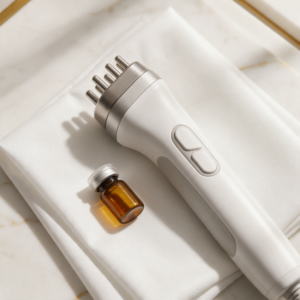
Ultrasound therapy, specifically therapeutic ultrasound at frequencies used in physical therapy, generates sound waves that penetrate tissue and create micro-vibrations within fibrotic areas. This breaks down dense collagen cross-links and increases local circulation. Multiple sessions are typically required, but patients often report noticeable softening after four to six treatments.
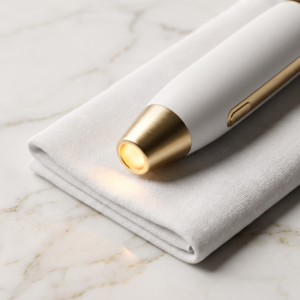
Radiofrequency devices, including technologies used in medical spa settings, deliver controlled heat to the dermis and subdermal tissue. Heat remodels collagen, stimulating new, organized fiber production while degrading irregular scar tissue. When combined with lymphatic drainage, the results are often significantly better than either treatment alone.
Compression garment use — even after the initial recovery period — remains underutilized. Patients who continue wearing compression during daytime hours for two to three additional months after their surgeon clears them often see accelerated softening of fibrotic tissue. The external pressure continuously counteracts the disorganized collagen formation underneath.
Surgical Options for Severe Fibrosis
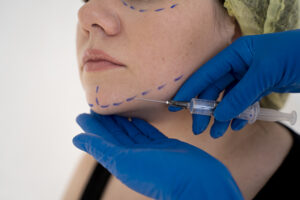
When fibrosis is severe, causes functional limitation, or has resulted in significant contour deformity, surgical revision becomes the more appropriate path. Liposuction revision surgery involves breaking up and removing fibrotic tissue using refined cannula techniques, with the goal of restoring smooth contour and normal tissue pliability.
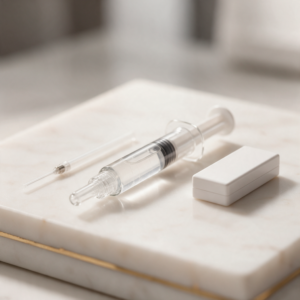
Subcision — a technique where a needle or cannula is used to cut the fibrous bands that tether skin to deeper tissue — is used for specific cases where retracted or puckered skin is the primary concern. It releases the tethering and allows the skin to redrape more naturally. Fat grafting is sometimes performed in conjunction with revision to fill depressed areas and improve overall surface uniformity.
A 2023 review published in the National Library of Medicine highlighted that liposuction revision outcomes are closely tied to the surgeon’s experience with secondary procedures, since operating in previously treated tissue requires a different approach than primary liposuction. Surgeons who specialize in revision work understand how to navigate altered anatomy without creating new irregularities.
The Role of Experience in Preventing Fibrosis
Technique matters enormously in determining how much fibrosis a patient develops. Overly aggressive passes with the cannula, failure to maintain even fat layer depth, and working too superficially all increase tissue trauma and the likelihood of significant fibrotic response. Surgeons with deep experience in body contouring understand how to remove fat efficiently while minimizing disruption to surrounding structures.
Wide-awake liposuction, performed under local tumescent anesthesia, allows the patient to remain conscious and responsive during the procedure. This gives the surgeon real-time feedback and allows for more precise technique — a significant advantage in minimizing tissue trauma and, by extension, fibrotic response.
What a Revision Consultation Looks Like
A revision consultation for abdominal fibrosis starts with a thorough physical examination of the affected areas. An experienced surgeon assesses the depth, density, and distribution of fibrotic tissue, evaluates skin quality and laxity, and reviews your original surgical history when available. Photographs are taken to document current contour and irregularities.
From there, the surgeon develops a treatment plan that reflects the actual extent of the fibrosis and your specific goals. For some patients, that means a structured course of non-surgical treatments first. For others, particularly those with established, dense fibrosis and clear contour deformity, surgical revision is the more direct and effective route. The right answer depends entirely on the individual case — which is why a proper evaluation, not a generic protocol, drives the plan.
Realistic Expectations for Recovery and Results
Whether you pursue non-surgical treatment or surgical revision, patience is part of the process. Non-surgical approaches typically require six to twelve weeks of consistent treatment before full results are visible. Surgical revision requires its own healing period, and the same post-operative care that matters after primary liposuction — compression, lymphatic drainage, activity modification — applies equally here.
Fibrosis can recur after treatment, particularly if the same factors that contributed to it the first time go unaddressed. Maintaining compression garment use, following post-care protocols carefully, and working with a provider experienced in post-surgical management gives patients the best chance of a durable, smooth result.