How Semaglutide Helps Patients Lose Weight Safely

Introduction

Losing weight is a challenge for millions of people, even when they follow strict diets and exercise routines. For many, the issue is not a lack of effort but rather how the body regulates hunger, metabolism, and fat storage. This is why medical weight loss treatments have gained significant attention in recent years. Among them, semaglutide (which goes by brand names Ozempic and Wegovy) has emerged as one of the most effective and widely discussed options.

Originally developed to treat type 2 diabetes, semaglutide is now FDA-approved for weight management and has shown impressive results in clinical trials. Studies have demonstrated that patients using semaglutide can lose an average of 14.9% of their body weight over 68 weeks, making it one of the most effective non-surgical weight loss solutions available today. As more people turn to this treatment, understanding how it works—and why it is considered safe—has become increasingly important.

What Is Semaglutide?

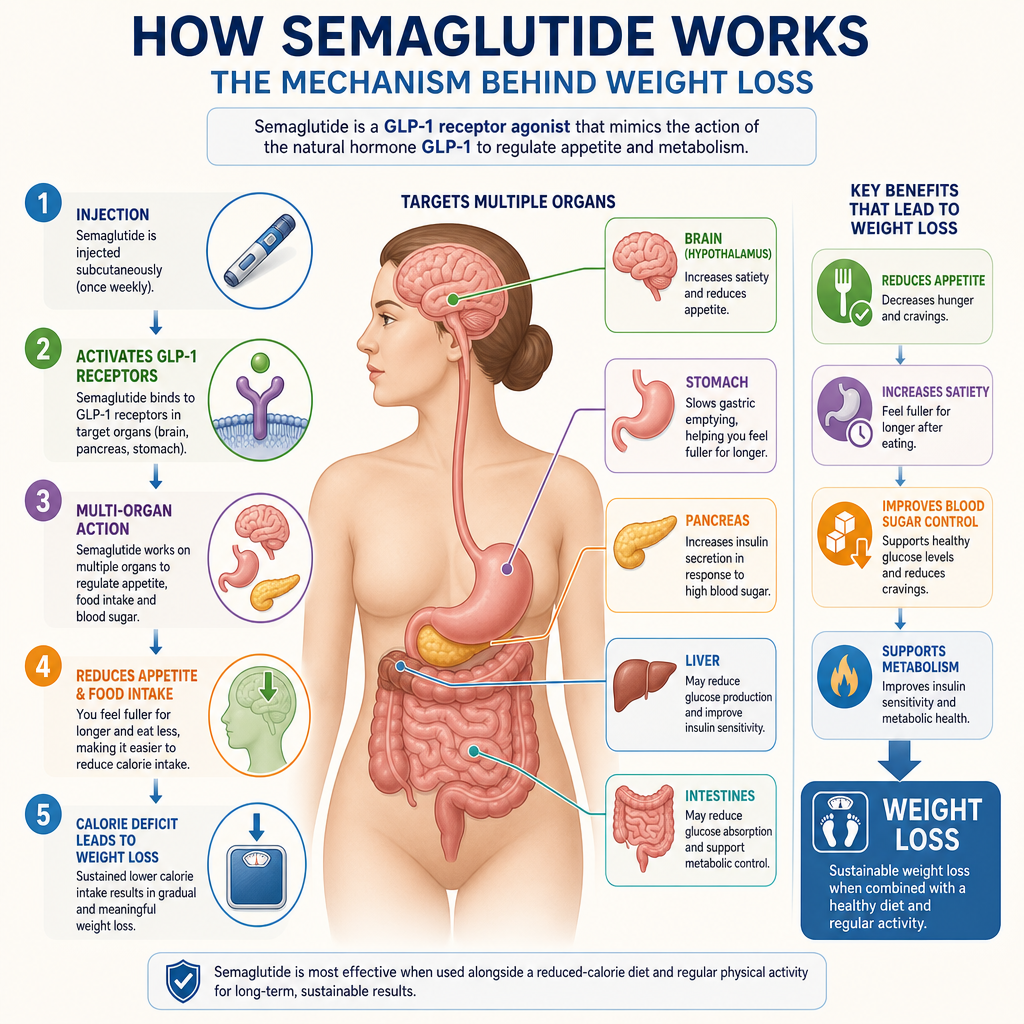
Semaglutide is a medication that belongs to a class of drugs known as GLP-1 receptor agonists. These medications mimic a naturally occurring hormone in the body called glucagon-like peptide-1, which plays a key role in regulating appetite, blood sugar levels, and digestion. By enhancing the body’s natural processes, semaglutide helps patients feel fuller for longer periods and reduces the urge to overeat.

Its rise in popularity is largely due to its ability to address the biological factors behind weight gain rather than relying solely on willpower. This represents a shift in how weight loss is approached, moving from traditional diet-based methods to medically supported treatments that target the root causes of obesity.

How Semaglutide Works in the Body

The effectiveness of semaglutide lies in how it interacts with multiple systems in the body. One of its primary actions is slowing gastric emptying, which means food stays in the stomach longer after eating, helping patients feel full for extended periods. At the same time, it acts on appetite-regulating centers in the brain, reducing hunger signals and cravings.

Clinical research strongly supports these mechanisms. In the same landmark trial, 86.4% of participants lost at least 5% of their body weight, and nearly 70% achieved a weight loss of 10% or more. These outcomes are clinically significant, as even modest weight loss can lead to meaningful improvements in metabolic health.

What Results Can Patients Expect?

One of the reasons semaglutide has gained widespread attention is the consistency of its results. In clinical trials, patients lost an average of nearly 15% of their body weight over 68 weeks. In real-world settings, results are still impressive, though slightly lower due to variations in adherence and lifestyle factors.

For example, a study published in JAMA Network Open found that patients lost approximately 5.9% of their body weight at 3 months and 10.9% at 6 months. These results demonstrate that meaningful weight loss can begin relatively early in the treatment process.

However, it’s important to note that outcomes are significantly better when semaglutide is combined with lifestyle changes such as improved nutrition and regular physical activity.

Why Semaglutide Is Considered Safe

Safety is a key factor in any medical treatment, and semaglutide has been extensively studied in large-scale clinical trials. According to a systematic review by Cochrane, semaglutide produces clinically significant weight loss compared to placebo, with most side effects being mild to moderate in severity.

The most commonly reported side effects include nausea, digestive discomfort, and reduced appetite. These effects are typically temporary and tend to improve as the body adjusts to the medication. One of the reasons semaglutide is considered safe is the gradual increase in dosage, which helps minimize side effects and allows patients to adapt more comfortably.

Medical supervision further enhances safety by ensuring proper dosing and monitoring throughout the treatment process.

The Importance of Medical Supervision

Although semaglutide is highly effective, it is not a standalone solution. The best results are achieved when the medication is part of a comprehensive, medically supervised weight loss program. This includes regular monitoring, personalized adjustments, and ongoing support.

Research shows that patients who follow structured treatment plans achieve better outcomes than those who do not. Without guidance, adherence may decrease, leading to less consistent results. This highlights the importance of having a healthcare provider involved in the process.

Medical supervision ensures that patients not only lose weight safely but also maintain their progress over time. Medical supervision also allows the safe addition of complementary prescription appetite suppressants, if necessary or beneficial.

Benefits Beyond Weight Loss

In addition to promoting weight loss, semaglutide offers several important health benefits. It has been shown to improve blood sugar control, reduce insulin resistance, and support overall metabolic health.

Perhaps most notably, studies have demonstrated a significant reduction in cardiovascular risk among patients using semaglutide, making it a valuable option for individuals with underlying health conditions. This positions semaglutide as more than just a weight loss treatment—it is a tool for improving long-term health outcomes.

Limitations and Realistic Expectations

Despite its effectiveness, semaglutide is not a permanent solution on its own. Patients need to understand that maintaining weight loss requires long-term commitment. Studies have shown that individuals may regain a significant portion of the weight after stopping treatment if lifestyle changes are not maintained.

This reinforces the importance of viewing semaglutide as part of a broader health strategy rather than a quick fix. Sustainable results come from combining medical treatment with lasting behavioral changes.

Who Is a Good Candidate?

Semaglutide is typically recommended for individuals with a body mass index (BMI) of 30 or higher, or 27 and above for those with weight-related health conditions. It is particularly beneficial for patients who have struggled to lose weight through traditional methods alone.

Candidates who are committed to following a structured program and making lifestyle changes are more likely to achieve successful outcomes.

Conclusion

Semaglutide represents a major advancement in weight loss treatment by targeting the biological mechanisms that regulate hunger and metabolism. Through its effects on appetite, digestion, and blood sugar control, it allows patients to achieve meaningful weight loss in a safe and controlled way.

However, the key to success lies in combining the medication with proper medical supervision and long-term lifestyle changes. When used correctly, semaglutide can be a powerful tool not only for weight loss but for improving overall health and quality of life.

Recent Posts

Recent Posts

Choose Your Favorite Treatment & Save!

Select an new patient offer to experience the Rodriguez Rejuvenation difference!